How to Build a Successful AP Language and Composition Course: 5 Foundations Every AP Lang Teacher Needs
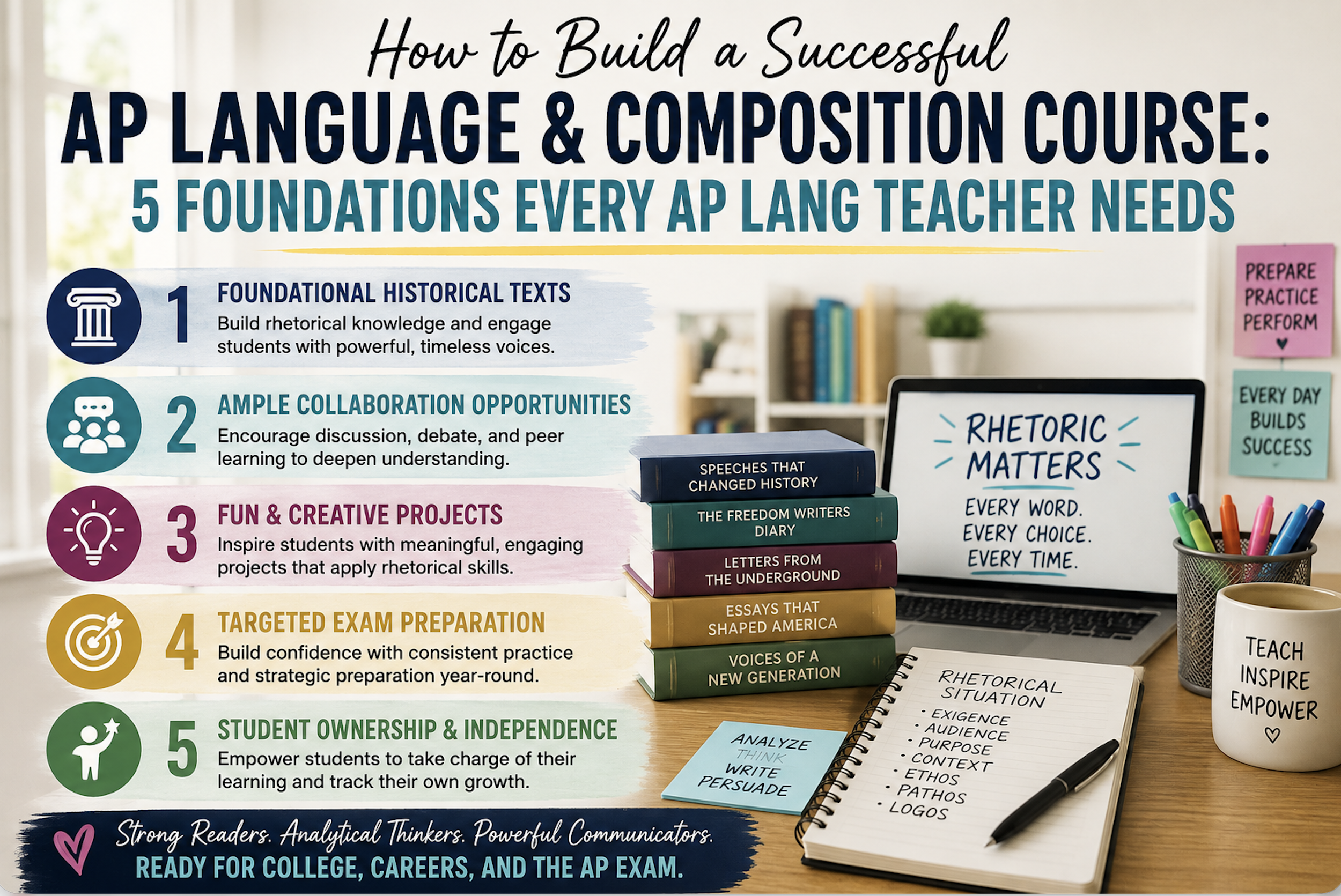
Whether you're teaching AP Language and Composition for the first time or looking to refresh your curriculum, one question always comes up: What separates an average AP Lang classroom from one where students consistently grow as readers, writers, and thinkers—and ultimately succeed on the AP exam? While strong exam preparation certainly matters, the most successful AP Language classrooms are built on much more than practice tests and timed essays. They foster curiosity, independence, collaboration, and authentic engagement with nonfiction. Here are the five essential foundations of a successful AP Language and Composition curriculum that prepare students for both the AP exam and college-level reading and writing.
1. Build Your Course Around Foundational Historical and Contemporary Nonfiction Texts: One of the greatest strengths of an AP Language course is exposing students to influential voices that have shaped history and continue to shape public discourse today. A balanced curriculum should include speeches, essays, letters, and articles from multiple historical periods and perspectives. These texts provide authentic opportunities to analyze rhetorical choices while building historical and cultural literacy.
Consider incorporating works such as:
Frederick Douglass's What to the Slave Is the Fourth of July?
Abraham Lincoln's Gettysburg Address
These readings naturally introduce students to rhetorical appeals, syntax, diction, organization, evidence, audience, and purpose while helping them recognize how rhetoric influences society.
2. Make Collaboration a Regular Part of Learning: The strongest AP Language classrooms are rarely lecture-driven. Instead, students should regularly discuss, debate, annotate, revise, and problem-solve together. Collaboration encourages students to defend interpretations with textual evidence while learning from multiple perspectives.
Try incorporating activities such as:
Socratic Seminars
Collaborative rhetorical analysis peer review workshops – like this toolkit for rhetorical analysis
Small-group synthesis discussion and projects – like this one created for The Great Gatsby
Gallery walks
Student-led discussions
These collaborative experiences strengthen analytical thinking while increasing student engagement throughout the year.
3. Balance Academic Rigor with Creative, Meaningful Projects: AP Language is rigorous—but that doesn't mean every assignment needs to feel like exam practice. Creative performance tasks allow students to apply rhetorical concepts in authentic ways while maintaining high academic expectations.
Some engaging project ideas include:
Designing persuasive advertising campaigns
Producing podcasts analyzing rhetorical strategies
Creating multimedia presentations on current issues
Writing speeches for authentic audiences
Developing advocacy campaigns using multiple sources
Producing documentary-style videos
Check out these creative projects I use throughout the year with my students
These projects require students to analyze rhetoric while creating persuasive communication of their own—one of the most effective ways to deepen understanding.
4. Prepare Students for the AP Language Exam Throughout the Year—Not Just in the Spring: One of the biggest mistakes AP teachers make is waiting until March or April to begin focused exam preparation. Instead, build AP-style thinking into everyday instruction from the very beginning of the course.
Successful AP teachers regularly incorporate:
AP-style multiple-choice questions
Short rhetorical analysis practice
Mini synthesis activities
Timed writing checkpoints
Standards-based writing conferences
Digital exam practice using AP Classroom
Essay planning strategies using scratch paper
Self-monitoring of pacing during timed writings
Using these exam prep materials throughout the year led to an 87% pass rate last year!
By embedding exam skills throughout the year, students develop confidence gradually instead of feeling overwhelmed during testing season.
5. Give Students Ownership of Their Learning: Perhaps the most overlooked ingredient in successful AP classrooms is student ownership. Students perform best when they become active participants in their own growth rather than passive recipients of instruction.
Provide opportunities for students to:
Set writing goals
Track progress on AP skills – like these AP Classroom MCQ remediation charts
Reflect after essays and assessments
Choose independent nonfiction readings
Select review activities based on areas of need
Design inquiry questions for research
Evaluate their own growth using AP rubrics
When students understand why they're learning a skill and take responsibility for improving it, both motivation and achievement increase significantly.
Final Thoughts: A successful AP Language and Composition curriculum is about much more than preparing students to earn a qualifying score on the AP exam. It's about developing confident readers, analytical thinkers, effective communicators, and independent learners.
By combining foundational nonfiction texts, student collaboration, creative projects, intentional AP exam preparation, and student-centered learning, you'll create a classroom where students remain engaged while building the skills they'll use long after exam day. The result isn't just stronger AP scores—it's a richer, more meaningful learning experience that prepares students for college, careers, and informed citizenship.
